Oh My, Your Bone Is Melting Away
by JoAn Majors

What happens when you say to a patient that she has “a little resorption” (or “a little bone loss”) versus saying to her, “Oh My, your bone is melting away?” In the patient’s mind, there’s a world of difference.

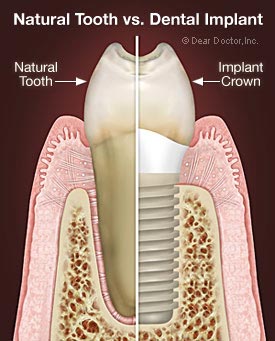
The American Heritage Dictionary defines resorption as “the destruction, disappearance or dissolution of tissue or body part by biochemical activity, as the loss of bone or of tooth dentin.” These words indeed sound scary and suggest hurricane-level damage in the patient’s mouth, but to someone who may have never heard the definition before, resorption sounds like absorb again, like everything goes back to normal. We know that just the opposite occurs: a patient loses four mm of bone within that first year of losing the tooth. That’s ten times greater than the rate in the following years.

Consider this: if your bone were melting away, would you want to be told? If instead of postponing treatment, you could save time and money for a problem that only gets worse the longer you wait, wouldn’t you want to be told of its urgency in a language you could easily comprehend? If your doctor has not shared with you everything about your condition ahead of time, you might wonder. After all, you’re captive in his/her care and know nothing of dentistry but how you feel when you’re in the treatment room. If something that could be taken care of now actually costs less, isn’t it the doctor’s responsibility to tell you? Should the doctor end up profiting from your failure to act prudently, his/her professionalism could very well come into question. Did she/he gain at your expense by withholding information about your health? Would she/he be guilty of supervised neglect, afraid that you would like him/her less, or of diagnosing your pocketbook instead of your mouth?

Because words, both their explicit meaning and their inferences, are the door to whether or not you’re allowed to perform the service, why not OWN the language? Imagine that a patient decides a year after losing a molar to agree to your recommendation for a single tooth implant. If you hadn’t told him before about the possibility that he will first have to consider bone grafting, having to tell him now can seem inappropriate or a downright hustle. Get permission ahead of time to disclose the total story.

“Mr. Patient, may I have your permission to share with you everything that concerns me?” What do you think your patient is going to say, “No?” The best thing about getting permission is that it liberates you from your own erroneous zone of timidity. When we fear, assume or anticipate rejection, we often start editing our content in the hopes of not offending. Especially when communicating your patients’ oral health, this is an error of judgment. To make the best possible choices for their long-term oral health, patients need all the facts. Eliminate insider “shop talk” and include your patients in the conversation. You know what the words mean, but your patients don’t and that means they’re left out. Since that’s not your intention, take the opportunity to include them. Translate every scientific, multi-syllabic phrase into savvy lingo that any lay person can understand.

In addition, eliminate the use of limiting terms. When talking with patients, reverse the industry-wide tendency to make the treatment sound bad and the disease sound good. Instead of apologizing to them for their condition, make the treatment sound easy, a wise, economic and long-term solution, and make the disease sound like what it is, an illness that gets worse by doing nothing, an illness spreading in the dirtiest part of your body—your mouth. That’s only fair to your patients. After all, they have the condition, not you. They are responsible for their mouths, not you.

In fully leveling with your patient, forget we, as in, “We have a little infection down there, Mr. Patient,” and forget little. If the infection were so little, why do we need to have a root canal? If our pockets are so few, why do we need me back for a deep cleaning again? How about: “We have a little crowding, so we’ll just start with extractions and then go to full mouth braces?” If we have crowding, then you all sit there and get those teeth pulled!

Limiting terms are for shrinking violets, not health professionals. Patients appreciate candor and language they can understand. Their diseased condition only illustrates their need to become better informed. So replace each phrase you use with a word picture that causes the patient to see their condition clearly in their language and that underlines their need for urgency. For example, for dentures, say: “Mrs. Patient, I understand you feel that way. However, dentures are like a glass eye, which is esthetically pleasing and it occupies the space, but you realize, of course, that you will never see out of that glass eye. May I ask you, then, regarding your choices for a denture, do you want to look good or do you want to eat?”

If you want your patients making the wisest decisions for their dental health, speak to them in language that causes them to do so instead of language that makes them feel stupid or unseen. Your case presentation success rate will necessarily increase proportional to your patients’ comprehension of their condition.


JoAnn MajorsJoAn Majors is a professional speaker, published author and registered dental assistant. Her company, Dentistry by Choice Training, L.L.C. is a nationally accredited AGD-PACE provider for continuing education. She is a member of the Nat’l Speakers Assn. and the Global Speakers Network, Assn. of Dental Implant Aux., Am. Assn. of Dental Office Mgrs., Dental Podiums and various other organizations. Her first book, with a foreword by Dr. Carl Misch, has trained thousands of dental implant teams. Her articles have been featured in magazines and on-line in over 26 different publications. Her systems deliver results and encouragement to the workplace and home. For more on her seminars and her third book, “EncourageMentors: 16 Attitude Steps for Building Your Business, Family & Future,” please visit http://www.joanmajors.com” and you can also receive a FREE copy of her special report, “10 Tips for Successful Implementation of Implant Dentistry in Today’s Practice.”

ICOI MEMBER LOGIN
Remember me
Forgot Login?
Forgot Password?


PARTNERS

Tooth IQ

Dear Doctor Logo